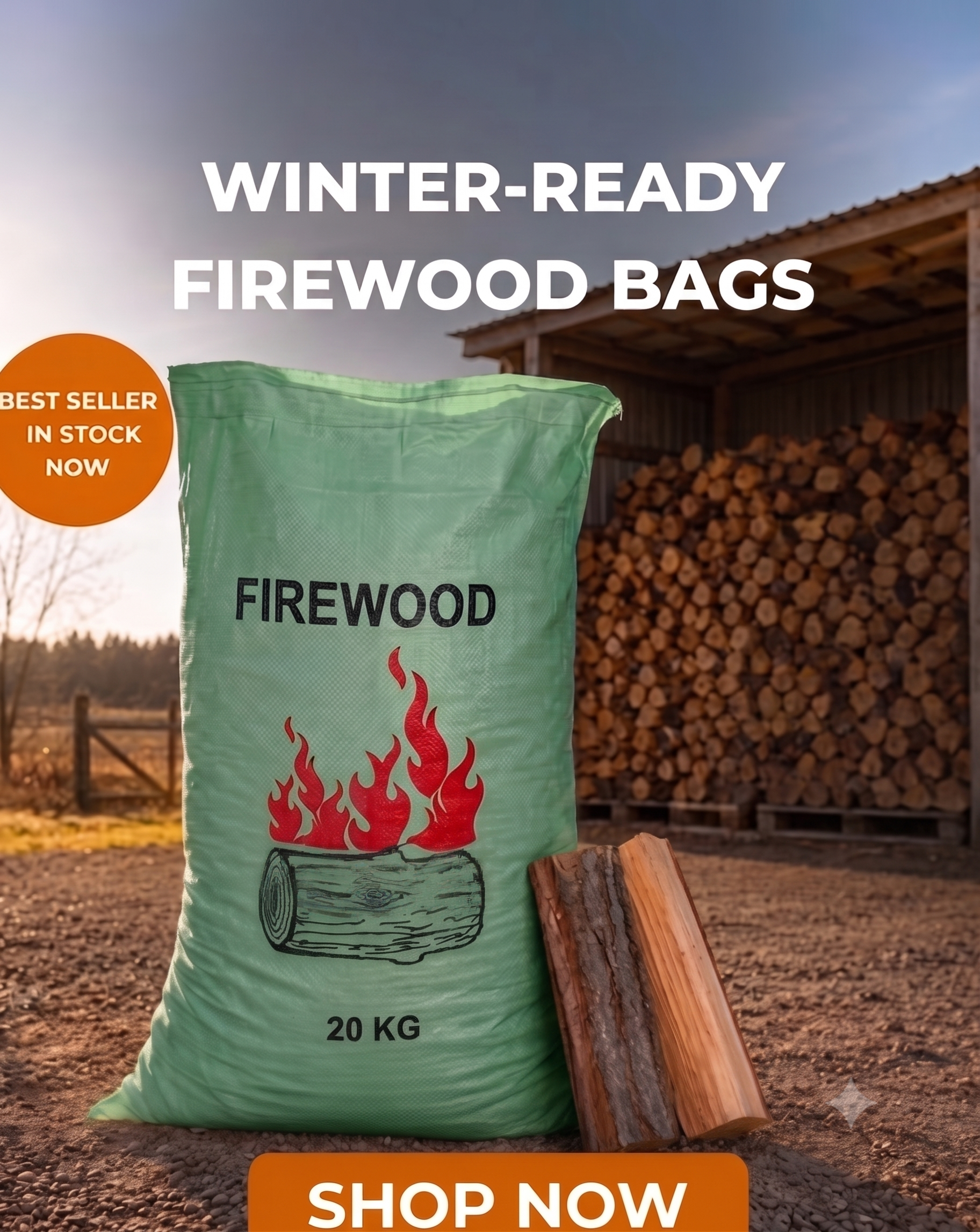
If you sell firewood — whether in small bundles for weekend campers or bulk loads for winter heating — the packaging you choose says a lot about your business. Firewood packaging bags aren’t just containers; they’re a functional part of the product experience. They protect the wood, make handling easier, and give your brand a professional look on store shelves or delivery trucks.
Among all the packaging options available today, one material has consistently outperformed the rest: polypropylene, better known as PP. Firewood packaging PP woven bags have become the go-to choice for firewood suppliers, sawmills, and logistics companies around the world. In this article, we’ll break down exactly why Aura Plastic’s PP woven bags are considered the smartest choice for firewood packaging, and what makes them different from traditional alternatives like plastic mesh bags, paper sacks, or cardboard boxes.
The Growing Demand for Reliable Firewood Packaging Bags
Firewood is a seasonal but high-volume product. During peak months, suppliers need packaging that can be produced quickly, stored compactly, and used efficiently without slowing down operations. At the same time, the packaging has to survive rough handling — stacking, loading, unloading, outdoor storage, and sometimes even shipping across long distances.
Traditional packaging options often fall short in one area or another. Paper bags tear easily when exposed to moisture or sharp wood edges. Cardboard boxes are bulky, expensive to produce in bulk, and lose structural integrity when wet. Plastic mesh bags, while breathable, often lack strength and can split under weight.
This is where firewood packaging bags made from woven polypropylene step in to solve nearly every one of these problems at once.
What Makes PP Woven Bags Different?
Polypropylene woven bags are made by weaving thin strips of PP material into a tight, durable fabric. This fabric is then cut and stitched into bags of various sizes, often with an inner liner for added protection or an open-mesh weave for ventilation. The result is a bag that combines strength, flexibility, and cost-efficiency in a way that few other materials can match.
Here’s a closer look at the core advantages that make firewood packaging PP woven bags stand out.
1. Exceptional Strength and Durability
Firewood logs have sharp edges, splinters, and uneven surfaces. Ordinary bags puncture or rip easily under this kind of pressure, especially when stacked or transported. PP woven bags are engineered to resist tearing, puncturing, and abrasion far better than paper or thin plastic alternatives.
This durability means fewer damaged bags, less product loss, and fewer customer complaints about firewood spilling out during transport or storage. For businesses moving large volumes of firewood, this translates directly into lower operational costs.
2. Excellent Load-Bearing Capacity
Whether firewood is packed in 10 kg bundles or 20 kg bulk bags, the packaging needs to support that weight without stretching, sagging, or breaking. PP woven bags have a high tensile strength, allowing them to safely hold heavy loads. This makes them ideal not just for retail-sized bags but also for bulk bags (often called FIBC or jumbo bags) used in commercial firewood distribution.
3. Weather and Moisture Resistance
One of the biggest challenges in firewood packaging is protecting the wood from moisture. Wet firewood is harder to burn, weighs more during transport, and can develop mold if stored improperly. Woven PP fabric is inherently water-resistant, and when combined with a laminated inner layer, it becomes even more effective at keeping moisture out.
At the same time, many firewood packaging PP woven bags are designed with breathable weaves that allow trapped moisture from freshly cut wood to escape, preventing mold growth from the inside while still blocking rain and humidity from the outside. This dual functionality is difficult to achieve with cardboard or standard plastic packaging.
4. Lightweight Yet Tough
Despite their strength, PP woven bags are remarkably lightweight. This reduces shipping costs for the bags themselves and makes them easier for workers and customers to handle. A lighter bag also means less overall packaging weight added to the product, which matters when firewood is often sold by weight.
5. Cost-Effective for Bulk Production
For firewood suppliers who need thousands of bags per season, cost efficiency matters. PP woven bags are relatively inexpensive to manufacture at scale compared to cardboard boxes or heavy-duty plastic containers. Raw polypropylene material is affordable, and the weaving process is fast and highly automated, keeping per-unit costs low even for large production runs.
This affordability doesn’t come at the expense of quality — it simply reflects how efficient PP as a packaging material has become for high-volume industries like firewood, agriculture, and construction supplies.
6. Customizable and Brand-Friendly
Firewood packaging bags made from PP woven fabric can be easily printed with logos, branding, usage instructions, or safety information. Whether you want a simple one-color print or a full-color design covering the entire bag, PP woven material takes ink well and holds its appearance over time, even with outdoor exposure.
This is a major advantage for firewood businesses looking to build brand recognition at retail locations like gas stations, grocery stores, or hardware stores, where shelf appeal can influence buying decisions.
7. Eco-Friendly and Reusable Potential
While plastic packaging sometimes gets criticized for environmental impact, PP woven bags are actually one of the more sustainable options available. They are recyclable, and because of their durability, they’re often reused multiple times by both suppliers and end customers before disposal. Some firewood businesses even offer bag return or refill programs, reducing overall packaging waste.
Compared to single-use paper bags that degrade quickly and cardboard that’s often discarded after one use, the reusability of PP woven bags gives them a longer functional lifecycle.
8. Versatile Sizing Options
Firewood packaging needs vary widely depending on the target customer. A camping supply store might want small 5–10 kg bags for individual bundles, while a regional distributor might need large 20–40 kg bags or bulk FIBC bags for wholesale delivery. PP woven bags can be manufactured in virtually any size, with or without handles, drawstrings, or valve openings, making them adaptable to nearly any firewood business model.
PP Woven Bags vs. Other Firewood Packaging Materials
To put things in perspective, here’s how firewood packaging PP woven bags compare to common alternatives:
- Paper bags: Cheaper upfront, but weak against moisture and sharp edges. Not suitable for repeated handling or outdoor storage.
- Cardboard boxes: Bulky to store and transport, poor moisture resistance, higher material cost for equivalent strength.
- Plastic mesh bags: Good ventilation but generally lower tensile strength, making them prone to splitting under heavier loads.
- PP woven bags: Strong, moisture-resistant, lightweight, customizable, and cost-effective — checking nearly every box a firewood supplier needs.
This comparison is a big reason why more firewood businesses, from small local operations to large-scale exporters, are switching to woven polypropylene packaging.
Practical Tips for Choosing the Right PP Woven Bags for Firewood
If you’re considering switching to PP woven bags for your firewood business, keep these factors in mind:
- Choose the right weave density — A tighter weave offers more protection from dust and moisture, while a looser weave improves ventilation for freshly cut, still-drying wood.
- Decide on lining needs — Laminated inner layers add extra water resistance, which is useful for businesses in wetter climates or for outdoor retail display.
- Pick the right bag closure — Options include sewn tops, drawstring closures, or heat-sealed openings, depending on how the bags will be filled and used.
- Consider handle placement — Bags with reinforced handles make loading and carrying easier for both workers and customers.
- Match bag size to your sales channel — Retail customers usually prefer smaller, easy-to-carry bags, while wholesale buyers benefit from larger bulk bags.
Packaging might seem like a small detail in the firewood business, but it directly affects product quality, operational efficiency, and customer satisfaction. Firewood packaging bags need to withstand rough handling, protect against moisture, and support the weight of dense, splintery logs — all while remaining cost-effective for large-scale use.
Firewood packaging PP woven bags from Aura Plastics meet these demands better than most alternative materials on the market. Their combination of strength, weather resistance, lightweight design, and customization options makes them a practical, reliable, and economical solution for firewood suppliers of every size.
For any business looking to reduce product loss, cut packaging costs, and present a more professional image to customers, upgrading to PP woven bags isn’t just a smart choice — it’s quickly becoming the industry standard.