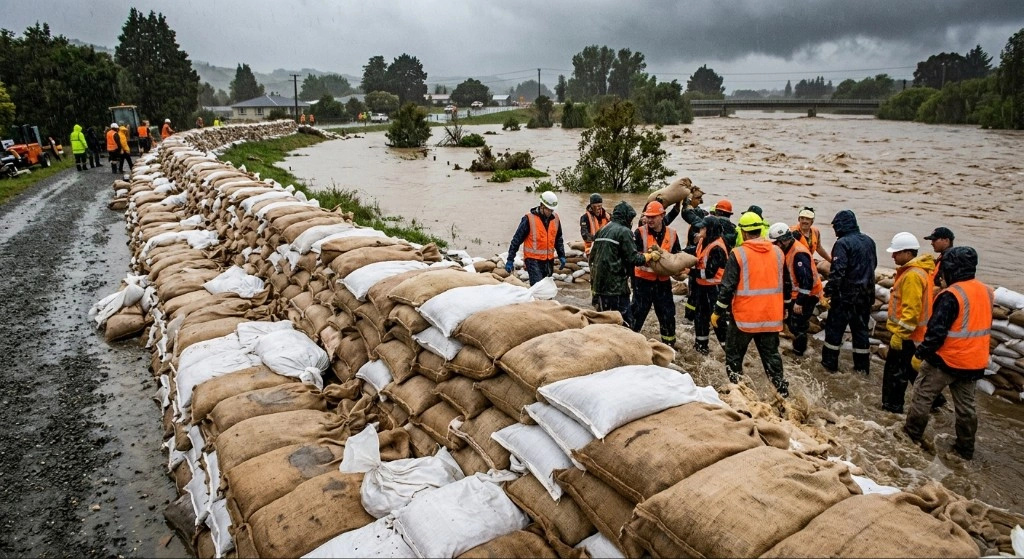
They’re just bags of sand — no motors, no batteries, no moving parts. Yet sandbags have been a go-to solution for engineers, emergency crews, farmers, and homeowners for well over a century. Their secret is versatility: stack them, weigh them down, and they can hold back water, stop erosion, block wind, or anchor almost anything in place. Here’s a closer look at where sandbags actually get used.
1. Flood Control
This is the classic use, and for good reason. When floodwaters rise, sandbags are often the fastest line of defense available.
- Barrier walls — Stacked in overlapping rows, sandbags form temporary levees that redirect or hold back rising water from homes, businesses, and roads.
- Doorway and window seals — A few bags placed against entry points can keep several inches of water from seeping indoors.
- Sump and drain plugs — Bags placed over floor drains or low openings stop water from backing up into basements.
- Riverbank reinforcement — During storm surges, sandbags shore up weak points in existing levees or embankments before they fail.
The reason sandbags work so well here is simple physics: their weight and flexible shape let them mold to uneven ground and stack tightly, creating a barrier with far fewer gaps than rigid materials.
2. Erosion Control
Sand, soil, and shorelines are constantly under attack from wind, waves, and running water. Sandbags help slow that process down.
- Streambank and shoreline stabilization — Bags placed along riverbanks or coastlines absorb wave energy and reduce the speed of water washing over soil.
- Slope protection — On hillsides or construction sites, sandbags placed at the base of a slope catch and hold soil that would otherwise wash away in heavy rain.
- Construction site runoff barriers — Contractors use sandbags to direct stormwater away from exposed soil, protecting nearby storm drains and waterways from sediment pollution.
- Dune and beach preservation — Coastal communities sometimes use large sandbag structures to rebuild or protect dunes that buffer against storm surge.
3. Structural and Load-Bearing Uses
Beyond water and soil, sandbags are prized simply for their weight and stability.
- Anchoring tents, canopies, and signage — Event organizers and construction crews use sandbags to weigh down structures against wind, especially where stakes can’t be driven into pavement.
- Ballast — Sandbags provide adjustable, removable weight for scaffolding, stage rigging, hot air balloons, and photography or film equipment.
- Traffic and safety barriers — Placed around road construction zones, sandbags stabilize barriers, signs, and cones.
4. Military and Defense Applications
Sandbags have a long history in military use, dating back to at least the 19th century.
- Fortifications and bunkers — Stacked sandbags absorb shrapnel and small-arms fire, making them a staple of trench and bunker construction.
- Blast mitigation — Around checkpoints or vulnerable structures, sandbag walls help reduce the impact of explosions.
5. Everyday and Practical Uses
Sandbags also show up in less dramatic, more everyday situations:
- Gardening and landscaping — Used to shape raised beds, retain soil in planters, or temporarily hold back mulch and gravel.
- Fitness training — Weighted sandbags are a popular strength-training tool because their shifting weight builds stabilizer muscles.
- Emergency vehicle traction — Placed in truck beds during winter, sandbags add weight over the rear axle to improve traction on snow or ice.
Why Sandbags Still Win
In a world of high-tech flood barriers and engineered erosion mats, sandbags remain popular because they’re cheap, portable, and require no special equipment to deploy. Anyone can fill a bag with sand and place it exactly where it’s needed, whether that’s a rushing river or a flapping tent. That combination of simplicity and effectiveness is why sandbags have stuck around for so long — and why they’re likely to remain a first responder’s and homeowner’s best friend for years to come.