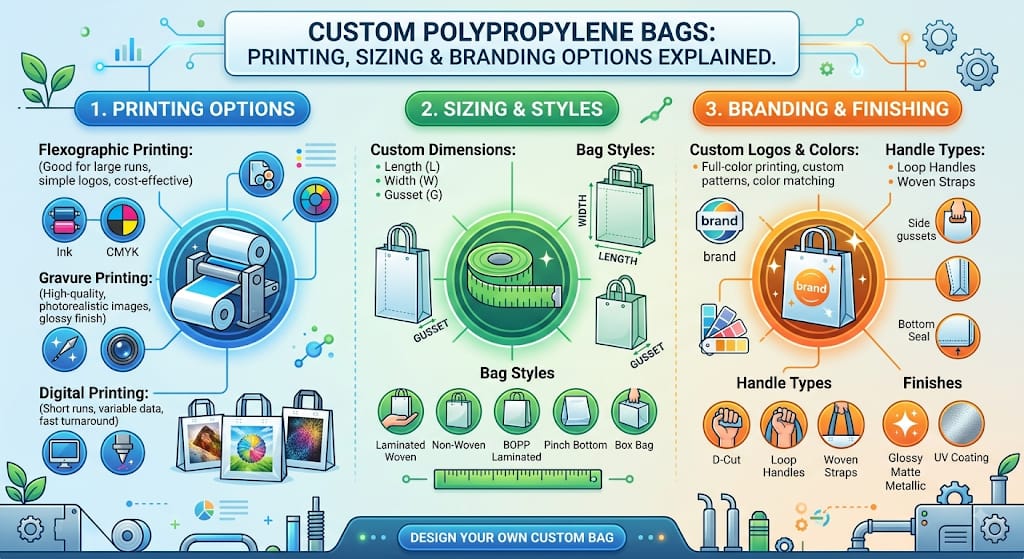
Polypropylene bags have become one of the most popular packaging choices for businesses that need durability, flexibility, and a professional finish. Whether you’re packaging rice, pet food, hardware, or retail goods, custom polypropylene bags offer a cost-effective way to protect your product while giving your brand a strong shelf presence. In this guide, we’ll break down everything you need to know about printing methods, sizing considerations, and branding options so you can make an informed decision for your next packaging order.
Why Businesses Choose Polypropylene Bags
Polypropylene (PP) is a versatile plastic known for its strength, moisture resistance, and lightweight nature. Unlike paper or basic plastic sacks, PP bags can handle heavier loads without tearing, resist punctures, and hold up well during transport and storage. This makes them a go-to option across industries — from agriculture and food packaging to construction and retail.
Beyond function, PP bags are also highly receptive to printing, which is why so many companies turn to custom printed sacks to reinforce their branding at every touchpoint, from the warehouse to the checkout counter.
Printing Options for Custom Polypropylene Bags
The printing method you choose has a big impact on the final look, cost, and durability of your bags. Here are the most common options:
1. Flexographic Printing
Flexo printing is the industry standard for high-volume orders. It uses flexible printing plates and fast-drying inks, making it ideal for large runs with consistent branding. This method works well for bold logos, simple color schemes, and repeat patterns.
2. Rotogravure Printing
For businesses that need photo-quality detail or intricate designs, rotogravure printing delivers sharper images and richer colors. It’s a higher-investment option but pays off when brand presentation is a top priority.
3. Digital Printing
Digital printing is perfect for smaller batches, seasonal packaging, or businesses that want to test designs before committing to bulk orders. It allows for quick turnaround and easy customization without the setup costs of traditional plate-based printing.
4. Screen Printing
Often used for simpler, single- or dual-color designs, screen printing is a durable and economical choice, especially for heavy-duty sacks used in industrial or agricultural settings.
Choosing the right packaging printing technique depends on your order volume, budget, design complexity, and how the bags will be used once they leave the production line.
Sizing Considerations for Custom PP Bags
Getting the size right isn’t just about aesthetics — it directly affects product protection, shipping efficiency, and shelf presentation. Here’s what to keep in mind:
- Product Volume and Weight: Heavier products need reinforced, appropriately sized bags to prevent tearing or seam failure.
- Standard vs. Custom Dimensions: Standard sizes are more cost-effective for common applications like rice, grains, or animal feed. Custom dimensions make sense when you have unique product shapes or specific retail display requirements.
- Gusseted vs. Flat Bags: Gusseted bags expand to hold bulkier items, while flat bags are ideal for stackable, uniform products.
- Sealing and Closure Type: Consider whether your bags will use heat sealing, drawstrings, zip closures, or stitched tops, as this can influence the final sizing and structure.
Working closely with your packaging supplier to define these specifications early on helps avoid costly reprints or fulfillment delays.
Branding Options to Make Your Bags Stand On
Your packaging is often the first physical interaction a customer has with your brand, so it’s worth investing time into getting the branding right.
Logo Placement and Visibility
Strategic logo placement — front and center, or repeated across the bag — helps with brand recall, especially for products stacked or displayed in bulk.
Color Consistency
Matching your brand’s exact color palette (using Pantone matching systems) ensures consistency across all your packaging and marketing materials.
Finish and Texture
Matte, glossy, or laminated finishes can elevate the perceived quality of your product. A premium finish often signals a premium product, which can influence purchasing decisions.
Informational and Regulatory Printing
Beyond branding, many bags need to include barcodes, nutritional information, handling instructions, or compliance labeling. Planning for this space during the design phase prevents cluttered or hard-to-read packaging.
Eco-Friendly Messaging
As sustainability becomes more important to consumers, businesses are increasingly using their packaging to highlight recyclability, reduced plastic use, or eco-conscious sourcing.
Final Thoughts
Custom polypropylene bags offer a practical, durable, and highly customizable packaging solution for businesses across industries. By understanding your printing options, nailing down the right sizing, and investing in thoughtful branding, you can turn a simple sack into a powerful marketing tool. Whether you’re ordering custom printed sacks for agricultural products or exploring modern packaging printing techniques for a retail launch, the right combination of print, size, and design will help your product stand out and perform well from production to point of sale.
If you’re planning your next packaging order, take time to consult with a supplier who understands both the technical and branding sides of polypropylene bag manufacturing — it can make all the difference in the final result.