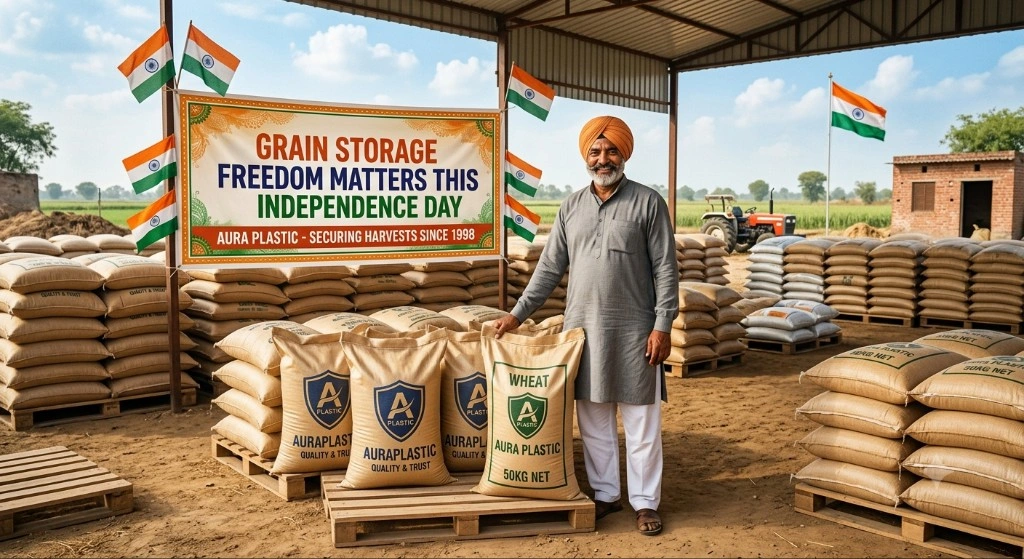
Every August, the nation pauses to celebrate freedom — freedom won through decades of struggle, sacrifice, and resilience. But for India’s farmers, independence means something more immediate too: freedom from the losses that eat into their harvest every single year. Modern grain bags help in achieving freedom from all those losses.
While we fly flags and sing anthems, thousands of tonnes of grain quietly rot in poorly ventilated warehouses, leak through damaged bins, or fall prey to pests and moisture. For a farmer, that’s not just wasted grain — it’s wasted labour, wasted rain, wasted months of waiting. It’s a kind of dependency nobody talks about: dependency on storage systems that fail them.
This Independence Day, it’s worth asking — what does true independence look like for the people who feed the nation?
The Hidden Cost of Poor Storage
India loses a significant share of its foodgrain every year to inadequate storage, before it even reaches a mill, a market, or a plate. The reasons are familiar: moisture seeping into jute sacks, rodents chewing through weak packaging, and grain left exposed to fluctuating temperatures in open or semi-covered structures.
For a smallholder farmer, this isn’t an abstract statistic. It’s the difference between a profitable season and a break-even one — or worse.
Self-Reliance Starts with Better Storage
The spirit of Atmanirbharta (self-reliance) that gets celebrated every August 15th isn’t just about big industries or national infrastructure. It’s equally about equipping the smallest farmer with tools that let them control their own outcomes — instead of leaving their harvest to chance.
This is where modern grain bags change the equation. Unlike traditional storage methods, quality grain bags offer:
- Airtight, moisture-resistant protection that keeps grain safe from humidity and seasonal dampness
- UV-resistant, durable material built to withstand outdoor storage through harsh sun and monsoon alike
- Pest and rodent resistance that reduces reliance on chemical fumigation
- Flexible, scalable storage that doesn’t require expensive silos or permanent infrastructure
- Lower cost per tonne stored, putting storage within reach of small and marginal farmers, not just large agribusinesses
In other words — grain bags don’t just store grain. They store a farmer’s independence: their income, their effort, and their ability to sell on their own terms rather than being forced into distress sales right after harvest.
From National Freedom to Farmer Freedom
There’s a quiet parallel between the freedom the country celebrates and the freedom a good storage solution gives a farmer. Just as independence meant not being at the mercy of external control, reliable grain storage means not being at the mercy of weather, pests, or poor infrastructure.
At Aura Plastics, we see our grain bags as more than a product — they’re a small but meaningful contribution to that larger idea of self-reliance. When a farmer doesn’t have to worry about losing 10-15% of their harvest to spoilage, they gain something that matters just as much as market price: control over their own outcome.
This Independence Day, Let’s Talk About Freedom from Loss
As the country marks another year of independence, it’s worth extending that spirit to the fields that feed us. Better storage isn’t a luxury — it’s a form of freedom. Freedom from unpredictable losses. Freedom to store, wait, and sell smart. Freedom to build a more secure livelihood, one harvest at a time.
That’s the kind of independence Aura Plastics grain bags are built for.
Looking to protect your harvest this season? Contact Aura Plastics range of durable, weather-resistant grain bags designed for Indian farming conditions.