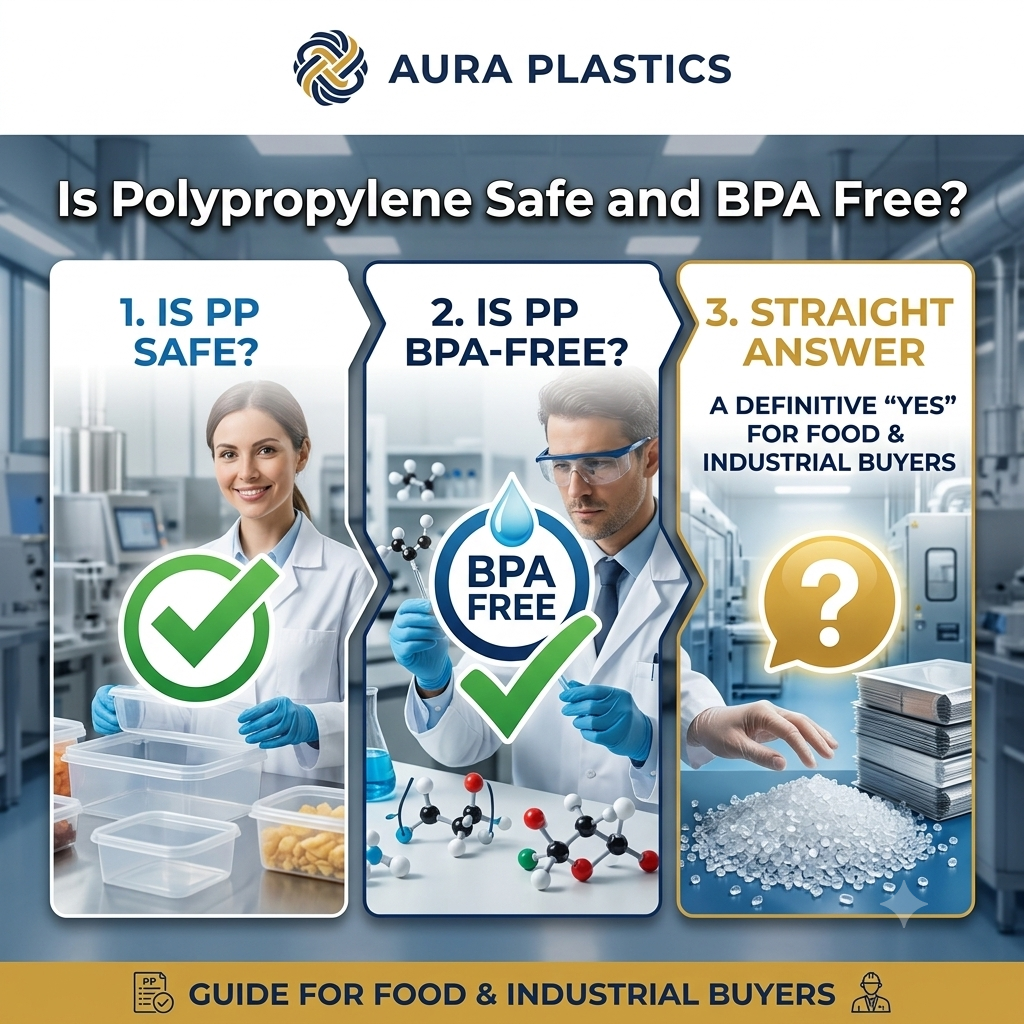
If you buy plastic packaging, containers, or parts for your business, you have probably asked this question: is polypropylene safe? Maybe a customer asked you. Maybe you saw the “BPA free” label and wondered what it really means. Either way, you want a clear answer, not confusing science talk.
At Aura Plastics, we work with polypropylene every day. So we want to give you a simple, honest answer, backed by facts. No hype. No scary claims either. Just the truth about polypropylene safety, so you can make good buying decisions for your food business, your factory, or your brand.
Is Polypropylene Safe?
Polypropylene (often called PP) is one of the safest plastics. It is approved by the FDA in the United States and by EFSA in Europe for use with food. It is used to make yogurt cups, medicine bottles, baby items, take-out containers, bottle caps, and thousands of other everyday products.
It does not contain BPA. It is not known to cause cancer. It handles heat well. And it does not easily react with food, water, or most chemicals.
That is the short version. Now let’s go deeper, because good buyers like you want to know why.
What Is Polypropylene?
Polypropylene is a type of plastic made from propylene gas. Manufacturers heat and press this gas into a strong, light, and flexible material. It can be shaped into hard containers, soft films, ropes, fabrics, or car parts.
You can spot polypropylene by looking for the recycling number 5 inside a triangle symbol, usually found on the bottom of a container. This number tells you the plastic is PP.
People like polypropylene because it:
- Is strong but still light in weight
- Handles hot and cold temperatures well
- Does not easily crack or break
- Resists most chemicals and oils
- Costs less to produce than many other plastics
- Can be recycled
Because of these features, polypropylene shows up in food packaging, hospital tools, car interiors, carpets, ropes, and even clothing fibers.
BPA Free Meaning: What Does It Actually Mean?
You will see “BPA free” written on lots of plastic products. But what is BPA?
BPA stands for Bisphenol A. It is a chemical that is used to make certain plastics, mainly a type called polycarbonate, and it is also used in the lining inside some metal cans. BPA makes plastic hard, clear, and shiny.
The problem is that BPA can leak out of plastic and into food or drinks, especially when the plastic is heated. Studies have found that BPA can affect hormones in the body. This is why many health experts and parents try to avoid it, especially for baby products.
So when a label says “BPA free,” it simply means that the chemical is not used and not present in that item. That is the plain bpa free meaning: no Bisphenol A was used to make the product, and none should leach into your food or drink.
Is Polypropylene BPA Free?
Yes. Polypropylene is naturally BPA free. This is an important point, and it is different from some other plastics.
Here is why: BPA is only used to make certain plastics, mainly polycarbonate and epoxy resin. Polypropylene is made in a completely different way, using a different raw material (propylene gas, not the chemicals used to make BPA). Because of this, manufacturers do not need to add BPA at any point while making polypropylene.
So when people ask “what does bpa free mean for polypropylene,” the answer is simple: it was never part of the recipe in the first place. There is no special “BPA free” version of polypropylene. Nearly all polypropylene products are already free of this chemical by nature.
This is one reason polypropylene is often used to replace polycarbonate in products like baby bottles, food storage boxes, and reusable water bottles.
Is Polypropylene Toxic?
This is another common worry, so let’s answer it directly: is polypropylene toxic? Based on current research and testing by major health agencies, the answer is no, not under normal use.
Here is what the evidence shows:
FDA and EFSA approval. Health authorities in the United States and Europe have reviewed polypropylene and approved it for contact with food and drinks. This approval is based on lab testing that checks whether the plastic releases harmful substances into food.
No proven cancer link. Unlike some older plastics, there is no solid research linking polypropylene to cancer in humans.
Chemically stable. Polypropylene does not react easily with acids, oils, or most household chemicals. This means it usually stays stable and does not break down into your food or drink.
No phthalates. Phthalates are another group of chemicals used in some plastics to make them soft and bendy. These have also raised health concerns. Polypropylene does not use phthalates either.
That said, no plastic is 100% risk-free in every situation. A few honest points worth knowing:
- Like most plastics, polypropylene is not biodegradable. It can sit in landfills or oceans for a very long time if not recycled.
- Very high heat, well beyond normal cooking or microwave use, can cause any plastic, including PP, to break down faster and release tiny particles.
- Damaged, cracked, or very old plastic containers should always be replaced, no matter what type of plastic they are.
- Like almost all plastics, polypropylene can shed tiny microplastic particles over time, and scientists are still studying what this means for long-term health. This is an area of active research, not a settled danger.
Why Buyers Trust Polypropylene for Food and Industrial Use
If you run a food business, a packaging company, or a factory, here is why polypropylene is often the smart pick.
- It handles heat. Polypropylene has a high melting point compared to many plastics. This makes it good for hot-fill packaging, microwave-safe containers, and dishwasher-safe products.
- It keeps food fresh. Because it does not react with food, it does not change the taste or smell of what is stored inside. This matters a lot for dairy products, sauces, and ready meals.
- It is tough. Polypropylene resists cracking, even after repeated use. This makes it ideal for reusable containers, bottle caps, and industrial parts that get handled often.
- It is budget-friendly. Compared to glass, stainless steel, or some other plastics, polypropylene is cheaper to produce and ship, since it is lightweight.
- It is widely recyclable. More and more recycling programs now accept polypropylene (code 5), which supports sustainability goals many buyers care about today.
- It meets global safety standards. From baby bottles to medical devices, polypropylene passes strict safety checks around the world, which builds trust with your own customers.
Simple Tips When Buying or Using Polypropylene Products
To get the most safety and value from polypropylene, keep these easy tips in mind:
- Always confirm the product is labeled food-grade if it will touch food or drinks.
- Check for the number 5 recycling symbol to confirm it is polypropylene.
- Buy from trusted, quality-checked suppliers like Aura Plastics.
- Replace containers that are cracked, warped, or badly stained.
- Avoid extremely high heat beyond what the product is rated for.
- Recycle polypropylene items whenever your local program accepts code 5 plastics.
Why Choose Aura Plastics
At Aura Plastics, we manufacture high quality, tested woven polypropylene fabric and polypropylene bags for transporting food grains like sugar, seed and fertilizers. Our BOPP (Biaxially Oriented Polypropylene) bags are moisture resistant, durable that are ideal for flour, lentils, pet foods, and animal feed.
Every batch we offer is checked for safety, strength, and consistency, so you can move forward with confidence, whether you are packaging food grains, building products, or sourcing parts for your factory.
If you want to learn more about our polypropylene products, or need a custom quote for your business, reach out to the Aura Plastics team today.
Frequently Asked Questions (FAQ)
- Is polypropylene safe for food storage? Yes. Polypropylene is approved by the FDA and EFSA for contact with food. It is commonly used in yogurt cups, takeout containers, and reusable food boxes.
- Is polypropylene BPA free? Yes. Polypropylene does not contain BPA at any stage of production. BPA is used to make different plastics, such as polycarbonate, not polypropylene.
- What does BPA free mean? BPA free means a product does not contain Bisphenol A, a chemical linked to hormone-related health concerns. It means that chemical was never added during manufacturing.
- Is polypropylene toxic to humans? Under normal use, polypropylene is not considered toxic. It is chemically stable, does not contain BPA or phthalates, and is approved for food and medical use by major health agencies.
- Can I microwave polypropylene containers? Many polypropylene containers are microwave-safe because the material handles heat well. Always check the product label to be sure, since not every plastic item is rated the same way.
- Is polypropylene safer than other plastics like polycarbonate? In terms of BPA content, yes. Polycarbonate is made using BPA, while polypropylene is not. This is why polypropylene is often chosen as a safer alternative for food and baby products.
- Can polypropylene be recycled? Yes. Polypropylene carries the recycling code 5 and can be recycled in many curbside and industrial recycling programs, though availability can vary by location.
- Is polypropylene good for the environment? Like most plastics, polypropylene is not biodegradable, so it should be recycled or reused whenever possible to reduce environmental waste.
- How do I know if a product is made from polypropylene? Look for the number 5 inside a small triangle symbol, usually printed on the bottom of the product.
- Where can I buy safe, quality polypropylene fabric? Aura Plastics manufactures tested, food-safe, and industrial-grade polypropylene fabric and pp woven bags for businesses of all sizes. Contact us to learn more or request a quote.