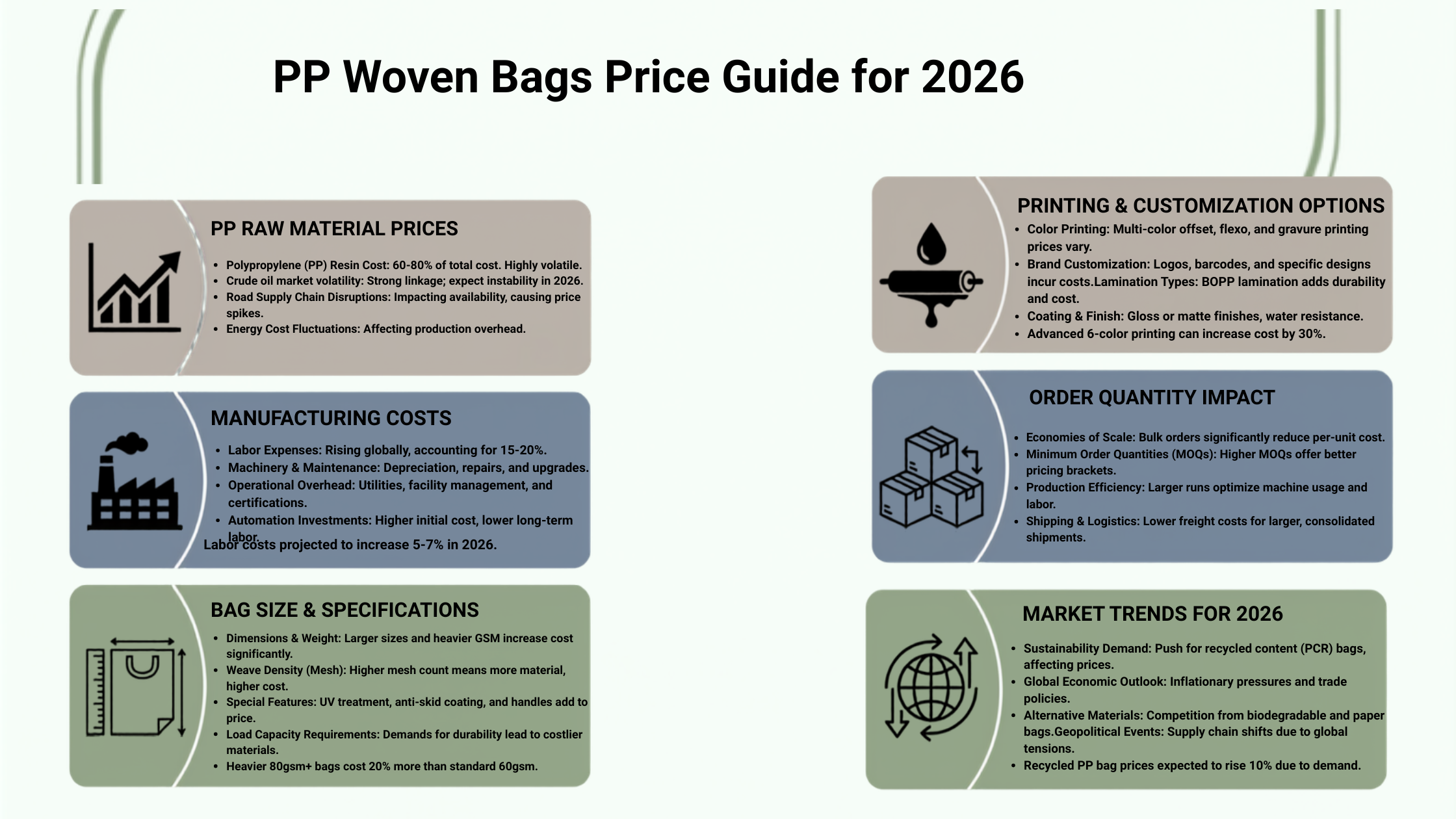
The price of PP woven bags is influenced by multiple technical, material, and market-related factors. While many buyers focus only on the per-piece quotation, understanding the real cost drivers helps businesses choose the right packaging without compromising quality or performance.
1. Polypropylene (PP) Raw Material Prices
The biggest cost factor in PP woven bags is polypropylene resin, which typically contributes nearly 60–80% of the total manufacturing cost. Since PP is petroleum-based, fluctuations in crude oil prices directly impact bag pricing.
In 2026, resin prices continue to fluctuate due to:
- Crude oil market volatility
- Global supply-demand imbalance
- Currency exchange movements
- Freight and logistics disruptions
2. GSM (Fabric Thickness)
GSM (grams per square meter) determines the strength and durability of the bag. Higher GSM means:
- More raw material usage
- Better tensile strength
- Increased load-bearing capacity
- Higher cost
For example, increasing GSM by 10 units can increase bag pricing by approximately 3–5%.
Typical GSM ranges:
- 50–70 GSM → Lightweight packaging
- 75–100 GSM → Standard industrial use
- 100+ GSM → Heavy-duty applications
3. Bag Size & Dimensions
Larger bags require more woven fabric and stitching, which raises production costs. Factors include:
- Length
- Width
- Gusset size
- Weight capacity
Heavy-duty fertilizer, cement, rice, and chemical bags generally cost more because they require stronger construction and additional reinforcement.
4. Printing & Branding
Customization significantly affects pricing.
Cost increases with:
- Number of print colors
- Full-surface BOPP printing
- High-resolution graphics
- Matte/gloss laminations
- Branding requirements
BOPP laminated bags are typically more expensive than regular woven sacks because of additional lamination and printing processes.
Examples:
- Single-color print → Lower cost
- Multi-color rotogravure print → Premium pricing
- BOPP laminated bag → Highest branding value
5. Lamination & Coating
Lamination improves:
- Moisture resistance
- Product protection
- Print quality
- Shelf appeal
However, coated or laminated bags require extra materials and production steps, increasing overall pricing.
Common options:
- Uncoated woven bags
- PP coated bags
- BOPP laminated bags
6. Order Quantity
Bulk orders reduce per-unit cost due to economies of scale.
Small MOQ orders usually cost more because:
- Machine setup costs are spread across fewer bags
- Printing cylinder costs remain fixed
- Material wastage becomes proportionally higher
Large-volume buyers often receive:
- Better raw material pricing
- Lower conversion costs
- Long-term contract discounts
7. Freight & Export Logistics
Shipping costs have become a major pricing component in 2026.
The final landed price depends on:
- FOB vs CIF terms
- Container availability
- Fuel prices
- Destination country
- Port congestion
Freight can add substantial cost to export shipments, especially for international buyers.
8. Quality Standards & Additives
Special features increase cost but improve performance:
- UV stabilization
- Food-grade certification
- Anti-slip coating
- Anti-static treatment
- Virgin PP usage
- Higher denier fabric
Premium industrial sectors often demand these specifications for better durability and compliance.
Estimated PP Woven Bag Price Range (2026)
| Bag Type | Approximate Price Trend |
|---|---|
| Standard PP woven bag | Lowest cost |
| Laminated woven bag | Medium cost |
| BOPP laminated bag | Premium cost |
| Heavy-duty industrial bag | Higher cost |
Custom printed export bag | Premium pricing |
Actual pricing depends on specifications, volume, printing, and shipment terms.
How Buyers Can Reduce Packaging Costs
Businesses can optimize pricing by:
- Choosing the right GSM instead of over-specifying
- Ordering in bulk quantities
- Standardizing bag sizes
- Reducing excessive print coverage
- Working with integrated manufacturers
- Locking long-term contracts during stable resin periods
There is no fixed “standard price” for PP woven bags. Pricing depends on technical specifications, raw material trends, customization requirements, and logistics costs.
For industrial buyers, the lowest quotation is not always the best value. A slightly higher-quality bag can reduce:
- Product losses
- Transportation damage
- Repacking costs
- Supply chain risks
As global packaging demand grows, businesses are increasingly focusing on durability, branding, sustainability, and cost-efficiency when selecting PP woven packaging solutions.